
THE FOUNDER AND THE CONVENER OF THE GLOBAL SOUTH NETWORK DR NAUMAN REAYAT WELCOMES LORD REED PRESIDENT OF THE SUPREME COURT OF THE UNITED KINGDOM DURING THE JUDGES GUEST LECTURE SERIES OF THE GLOBAL SOUTH NETWORK ON 20 JANUARY 2025 
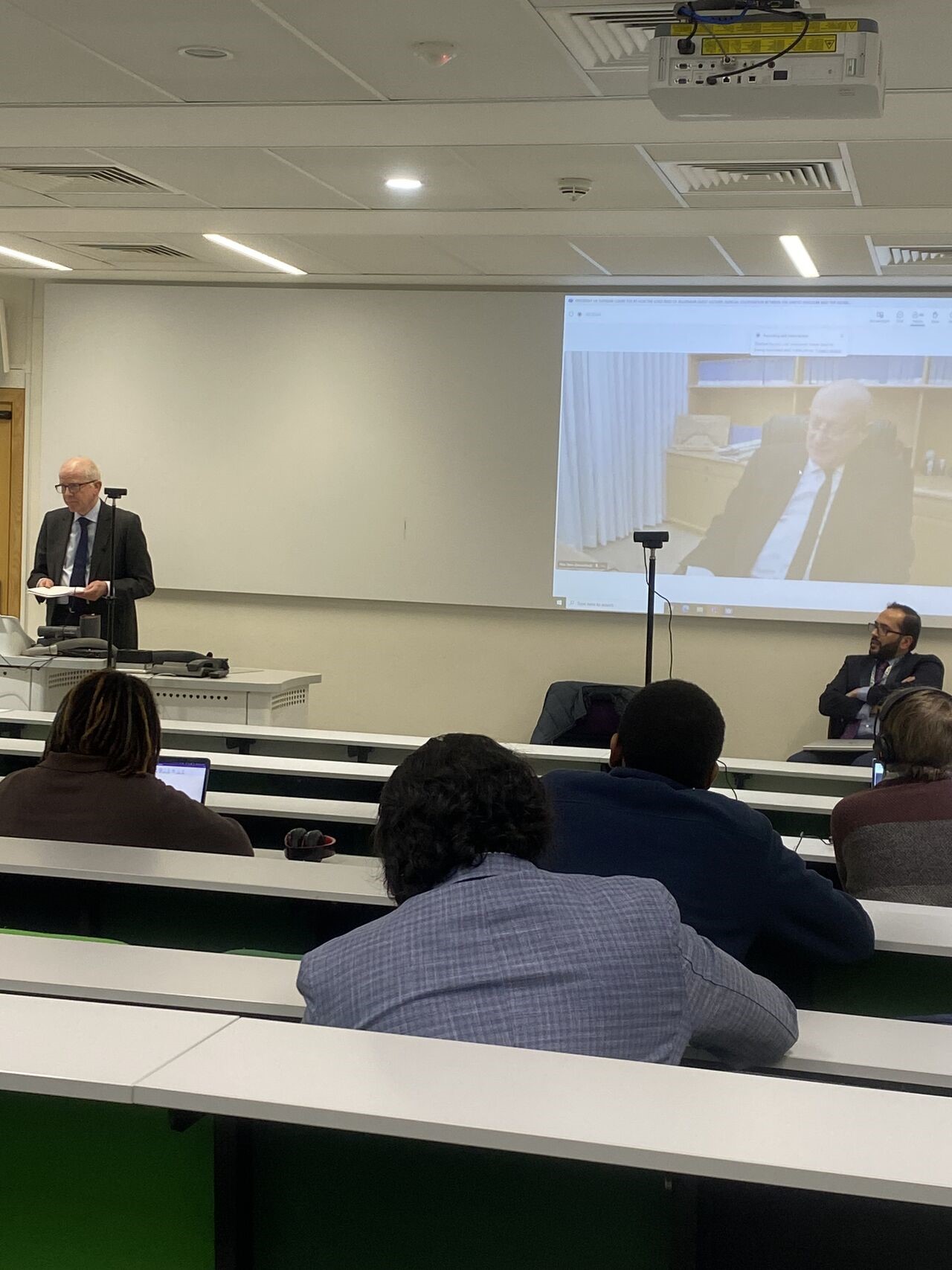
GUEST TALK OF LORD REED, PRESIDENT OF THE UK SUPREME COURT 
OPENING REMARKS BY THE FOUNDER AND THE CONVENER OF THE GLOBAL SOUTH NETWORK DR NAUMAN REAYAT 
GROUP PHOTO OF IN-PERSON ATTENDEES WITH LORD REED, PRESIDENT OF THE UK SUPREME COURT 
GROUP PHOTO OF IN-PERSON ATTENDEES WITH LORD REED, PRESIDENT OF THE UK SUPREME COURT 

HOW TO CITE THIS SPEECH: Lord Reed, Online Guest Lecture During The Global South Network Judges Guest Lecture Series, 20 January 2025, The Global South Network, https://globalsouthnetwork.com/complete-speech-of-lord-reed/ accessed (access date)
NORTH-SOUTH:JUDICIAL COOPERATION BETWEEN THE UNITED KINGDOM AND THE GLOBAL SOUTH
Lord Reed of Allermuir, The President of the Supreme Court of the United Kingdom and the Judicial Committee of the Privy Council.
During the Global South Network (GSN) Judges Guest Lecture Series, University of Leicester, 20 January 20251
Organiser and Moderator: Dr Nauman Reayat, the Founder and the Convener of the GSN.
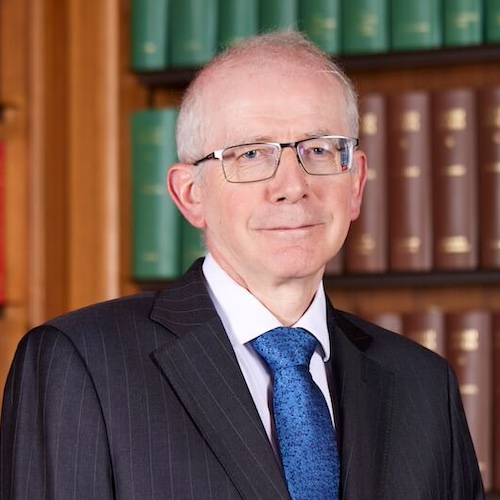
Honourable Robert Reed (Lord Reed of Allermuir) was educated at the Universities of Edinburgh and Oxford. He qualified as a member of the Scottish and English Bars and practised at the Scottish Bar between 1983 and 1998. He served as a judge in Scotland from 1998 to 2012, when he was appointed as a Justice of the Supreme Court. In June 2018 he became the Deputy President of the Court, and in January 2020 its President. In addition to sitting on the Supreme Court and the Judicial Committee of the Privy Council, Lord Reed is a member of the panel of ad hoc judges of the European Court of Human Rights and a former non-permanent judge of the Hong Kong Court of Final Appeal. He is also the High Steward of Oxford University, a member of the advisory board of the Oxford Institute of European and Comparative Law, and a former trustee of the British Institute of International and Comparative Law.
It is a great pleasure for me to give this lecture on judicial cooperation between the United Kingdom and the Global South as part of the Judges’ Guest Lecture Series of the Global South Network, and to be able to engage in this way with colleagues from around the world. I am grateful to the Network and to the University of Leicester for giving me this opportunity, and to Dr Reayat for organising and moderating the event. I am also grateful to the many distinguished colleagues who have agreed to provide online responses.
Judicial cooperation and dialogue between the UK and the Global South are not new, but they have become increasingly important in recent times. As the President of the UK Supreme Court, I have frequent contact with judges in the Global South and elsewhere, sometimes in order to discuss problems of common interest, and sometimes in order to provide advice or help to organise training. All of my colleagues also have contact with judges in other jurisdictions. Through these contacts, we and our counterparts in other jurisdictions are able to exchange good practices and to learn from each other’s experiences and jurisprudence. Our exchanges offer new perspectives and opportunities for reflection. Our own solutions do not always appear as obvious as before.
This forms part of a wider landscape of judicial cooperation between the UK judiciary as a whole and the Global South, which encompasses a range of activities and initiatives designed to foster dialogue, to build relationships, to enhance mutual learning, and to provide opportunities for judicial capacity building. This development has begun to be reflected in a growing recognition of the importance of international judicial engagements on the part of the UK government. The Foreign, Commonwealth and Development Office, for example, has increasingly supported the Supreme Court’s international work, resulting in a closer relationship with the department’s Judicial Diplomacy team, and in concrete support during some of our visits overseas, such as I received during a visit to Brazil last year, and also during some visits to the UK by judges from other jurisdictions. Recently, for example, the department provided support to visits to our court by delegations from Indonesia and Montenegro.
This engagement between the UK judiciary and judges of the Global South has many different dimensions. One long-standing aspect is the need for international judicial cooperation to address disputes involving multiple jurisdictions. From the conflict of laws to the implementation of international law, from the enforcement of foreign judgments to the recognition of our own judgments in other jurisdictions, the interaction of legal systems has long presented judges with challenges. These have grown in modern times. Populations have increasingly moved beyond their borders to work and to form families, or to avoid hardship and danger. The social and economic impact of globalisation, climate change and armed conflict have made us increasingly conscious of our mutual dependence. Developments in communications and transportation have created truly global trade, where funds can be transferred from one jurisdiction to another at the click of a computer mouse, and where contracts are concluded and wrongs committed across borders every minute, using online platforms. All these factors, and many others, have generated an increase in the number of legal relationships with foreign elements, and have created legal challenges across our jurisdictions that require similar or at least consistent judicial responses.
In this context, over the years the UK judiciary, and the Supreme Court in particular, have made a serious effort to engage with other jurisdictions around the world through judicial visits, bilateral activity and as part of multilateral organisations. This can involve welcoming visiting judges and providing programmes of activity, engaging in round tables on legal or constitutional subjects, taking part in conferences on matters of mutual interest, and providing training on judicial skills. Our principal aim is to strengthen the rule of law globally, by helping to support a robust and fair justice system and the independence of the judiciary, both in individual countries who seek our support and through international networks.
In assessing the significance of these developments, I would like to begin by saying something about the historical and cultural background. I will then turn to a particular mechanism of engagement which has its roots in history but remains active in the present day, namely the Privy Council, a court which is based in the UK and staffed mainly by UK judges, but sits as the highest court of a number of jurisdictions in the Global South. I particularly want to draw attention both to the interchange which that institution encourages between judges and lawyers in the UK and in the Global South, and to the experience and insight which it gives British judges in relation to the legal problems of other countries. I will then turn to consider wider judicial cooperation and dialogue in relation to matters of substantive law. Finally, I will consider judicial cooperation and dialogue in relation to other aspects of the courts, such as the maintenance of public confidence in the judiciary, and the protection of the independence of the judiciary. My overarching theme is the role of international judicial cooperation in maintaining the rule of law and democracy around the world.
1. The historical and cultural background
In the relatively recent past we have seen a major development in international judicial relations compared with the situation when I first qualified as a lawyer over 40 years ago. But we are following in a long tradition, which in Europe can be traced back to the ancient world. The Roman historian Livy describes how an embassy was sent from Rome to Athens in the fifth century BC to learn about the laws of Solon, for the purpose of preparing the Twelve Tables, the first Roman legal code.2 Writing a century later, the Greek historian Plutarch describes how Lycurgus, the Spartan lawgiver of around the eighth century BC, travelled to Crete and to Asia Minor, comparing the societies he found and the laws by which they were regulated, in order to draw up a constitution which would be suitable for the sort of society he wished to create.3 Many scholars view these accounts with a sceptical eye, but even if no such embassy was actually sent to Athens, and even if Lycurgus is a semi-legendary figure, it is nonetheless significant that travelling to other countries in order to study their law, for the purpose of learning from it and improving domestic law, was thought in ancient times, as it would be today, to be a sensible idea.
So there is nothing new about cooperation and dialogue between lawyers and judges in different countries. The relationship between the UK Supreme Court and the Global South continues to be influenced by important historical factors, as well as by contemporary issues and concerns. Indeed, the links between the historical and the contemporary are indissoluble. It is because of history that the UK shares the English language with many countries in the Global South: a shared language, and in consequence a culture which in some measure is also shared. Indeed, because we in the UK now include many people whose families have come here from the Global South, our language today is influenced by the language of the Global South, particularly the Caribbean and the Indian subcontinent. I was amused, when I gave a lecture recently at the University of the West Indies, when one of the commentators remarked that the Privy Council would struggle to understand the language used in criminal cases in the Caribbean, such as the use of the word “wicked” to mean “good”. In fact, that usage has been familiar in the UK since the 1980s, partly perhaps because of the number of our citizens who come, or whose parents or grandparents came, to this country from the Caribbean. Our culture is less traditional than people in other countries might imagine.
It is also because of history that the UK has a shared legal tradition with many countries in the Global South. The common law, originating in England, is now, for reasons of history, the basis of many countries’ legal systems. They include many countries in the Global South, such as India, Pakistan and Bangladesh; Botswana, Ghana, Nigeria Kenya, Tanzania, Malawi, Uganda and Zambia; Malaysia, and Singapore; and many other countries. Other countries in the Global South have legal systems which are based on a combination of common law and civil law sources, as in South Africa, Mauritius and the Philippines. So there are a great many courts in the Global South with which our court shares a legal tradition, and a method of legal reasoning. In many cases, we also share with them a constitutional tradition based on a representative democracy on the Westminster model. Those of us who sit on the UK Supreme Court are conscious of this shared tradition, and we encourage the citation of judgments from other common law jurisdictions in argument before us. Judgments from some of the countries I have mentioned, such as India, Singapore and South Africa, are regularly cited before us.
We are also aware that many courts in the Global South consider our court’s judgments as a possible source of ideas and possible guidance. This is due in part to the relationships that our court has developed with the judiciary in those jurisdictions. For example, in the last year or two we have welcomed judges to our court from such common law or mixed jurisdictions as the Bahamas, Mauritius, India, Malaysia, Brunei, Ghana, Kenya and Nigeria. It is unsurprising if judges from these jurisdictions which incorporate, at least partly, the common law method into their legal systems, may refer to our jurisprudence in their judgments.
But the links between the UK and the Global South are not only historical, and they are not limited to countries with which the UK has had a historical relationship. There are strong family ties between our citizens and people living in the Global South, especially in the Indian subcontinent and the Caribbean, but increasingly also in other countries, particularly in Africa, the Middle East and the Far East, as populations have moved across national borders.
There are also strong commercial connections, reflected in legal ties, as the common law is used today to govern contracts in countries where English law was never introduced by a colonial power. There are ties based on shared economic or defensive interests, often reflected in shared membership of international organisations. And there are relationships based on a mutual recognition that our different countries have a common interest in stability and in the international rule of law.
2. The Privy Council
Let me turn next to a particular mechanism of engagement between the UK Supreme Court and the Global South which has its roots in history but remains active in the present day, namely the Privy Council, the judges of which are normally also the judges of the UK Supreme Court. The jurisdiction of the Privy Council originated at the Norman conquest, but its judicial work greatly expanded in the nineteenth century, when it became the highest court of appeal for the British Empire. Its scope has greatly diminished since then, as the colonial era came to an end and most of the countries in the Commonwealth established their own highest courts. However, some Commonwealth countries have chosen to keep the Privy Council as their apex court even though they have become independent.
Currently, the Privy Council is the highest court of appeal for 11 independent Commonwealth countries, and for 18 overseas territories, Crown dependencies and sovereign base areas. All of the independent countries, and almost all of the overseas territories, are in the Global South. Many of them, such as Jamaica and Antigua and Barbuda, are in the Caribbean; some, such as Mauritius, are in the Indian Ocean; some, such as Tuvalu, are in the Pacific Ocean; others are in the South Atlantic, or the Mediterranean, or around the British Isles. In other words, they are all around the world.
They keep us busier than you might think. Last year, we delivered almost exactly the same number of Privy Council judgments as Supreme Court judgments: 42 compared with 43. I should explain, for those of you whose courts hear hundreds or thousands of appeals each year, that the UK Supreme Court selects the cases that it hears, as is usual in the common law tradition. It grants permission to appeal only in those cases that raise arguable questions of law of general public importance, of which there about 40 or 50 in the UK every year. Permission to appeal is also usually required in the Privy Council, unless the appeal raises a constitutional issue. So the numbers of appeals are much lower than in most civil law systems.
Appeals to the Privy Council are not evenly distributed among the different jurisdictions. They come mostly from the Caribbean, particularly Trinidad and Tobago, with a smaller number from other Caribbean jurisdictions, and from Mauritius. Some other countries, such as those in the Pacific and the South Atlantic, send cases to us only occasionally.
Deciding these appeals requires the judges of the Privy Council to engage very closely with legal issues arising in countries belonging to the Global South. We become aware of the sorts of issues which commonly arise in the societies we serve. Many of the issues are similar to those arising in the UK, such as cases involving tensions between commercial development and the protection of the environment, for example in relation to tourism in the Caribbean or commercial fisheries in the Pacific, or cases concerned with undocumented immigration, for example from Venezuela into Trinidad and Tobago. Some issues are of a broadly familiar kind, but they arise in a different social context: for example, questions concerning the legal recognition of same sex relationships. Other issues are of a less familiar kind. For example, there is quite a high number of cases in the Privy Council concerned with electoral laws and the redrawing of electoral boundaries. There is also a substantial number of cases concerned with money laundering, financial crime and corruption. Some cases arise from tensions between different ethnic or religious groups. Some are the consequence of the establishment of offshore international financial centres, in countries such as the Cayman Islands, the British Virgin Islands and the Bahamas, and concern business disputes from all over the world. Some demonstrate vividly the connectedness of our world, as disputed funds are transferred from one jurisdiction to another in a matter of seconds in order to evade civil or criminal enforcement.
In order to perform its role, the Privy Council needs to be accessible to the people that it serves, and it also has to engage with lawyers and judges in those jurisdictions. Since I became President of the Supreme Court, we have tried to improve the accessibility and engagement of the Privy Council in a number of ways. First, we have for some years offered hearings online, so that it is unnecessary for the parties and their lawyers to come to London. The lawyers can take part from their offices in their own countries, and their clients, and interested members of the public, can watch the hearings online, as they are all livestreamed. In fact, the largest online audience we have had for any case in the past five years, either from the UK or from the Commonwealth, was for an appeal last year from Jamaica, which was watched live online by over 55,000 people.4
Secondly, we have established meetings of court users, in which Privy Council judges take part, and an annual newsletter which is sent to users.
Thirdly, and in my opinion most importantly, the UK government last year accepted my proposal that judges from the jurisdictions that we serve should be eligible to be appointed as members of the Privy Council, so that they can sit with us on appeals. I made this proposal because it was clear to me that having the benefit of judges with direct experience of local conditions could only enhance the quality of the Privy Council’s decision-making. The first such judge to be appointed was Dame Janice Pereira, formerly the Chief Justice of the Eastern Caribbean Supreme Court and President of its Court of Appeal, who sat with us in December. She will be sitting with us again during this coming year, and I am hoping that another judge will be appointed in the course of this year. More, I hope, will follow over time.
Fourthly, my colleagues and I have accepted invitations to participate in events involving judges from the Privy Council jurisdictions, for example, in my case, by giving an online lecture last year at the University of the West Indies in Jamaica which was followed by a panel discussion involving Jamaican lawyers and academics, and by taking part last year in a conference of Caribbean judges on combatting financial crime. That conference provided me with the opportunity to meet, or renew my acquaintance with, many judges of courts in the Caribbean from which the Privy Council hears appeals, in addition to courts from other countries in the region, such as Guyana and Belize. I focused my address on the rule of law aspects of the recovery of the proceeds of crime, with particular reference to Privy Council jurisprudence. The conference demonstrated the value of bringing together the judiciary of different countries in a region who are experiencing similar social problems and have similar legal traditions, in order to share legal knowledge and experience and discuss best practice. I felt that the event was of real value in helping judges to tackle international financial crime: something which we need to do if we want to protect our democracies, our economies, and the rule of law.
Fifthly, we have continued to accept invitations for the Privy Council to sit in the jurisdictions that it serves. These invitations are always most welcome. In my time on the court we have sat in Mauritius, the Bahamas and the Cayman Islands.
So the Privy Council is a forum in which UK judges engage in a particularly sustained and focused way with lawyers and judges, and legal systems, from the Global South. But, of course, our contacts and relationships with the Global South extend far beyond the Privy Council jurisdictions. So let me turn next to wider judicial cooperation and dialogue, first in relation to matters of substantive law.
3. Cooperation and dialogue in relation to the law
The practical value of international legal discussions is evident when we are considering common legal problems, or problems which require international solutions. To give just one illustration of the importance of this, many countries in the Global South are important financial centres providing sophisticated banking, corporate and legal services to international clients. Such jurisdictions are inevitably liable to attract individuals and organisations wanting to commit financial crime or to conceal the proceeds of criminal activities. Criminal groups have wasted no time in embracing today’s globalized economy and the sophisticated technology that goes with it. Combatting money laundering is important if we are to combat the drug cartels, people smugglers and other criminal gangs who want to launder their profits or hide their gains behind an opaque screen of offshore trusts and companies. These are international as well as national problems, as the drug syndicates and people traffickers take advantage of the open borders, free markets and technological advances of the modern world.
A related problem in many countries is the use of illegally obtained funds by corrupt individuals to achieve economic and political influence. We all know countries where organised criminal syndicates have become powerful and entrenched, penetrating political parties, and undermining government and law enforcement. Corruption produces incalculable damage to governments and societies, and weakens democracy and the rule of law. Like financial crime, and drug and people trafficking, corruption is a phenomenon found in all countries, big and small, rich and poor. But it is in the Global South that its effects are most devastating, as it diverts funds that are needed for development, and discourages inward investment. In light of this, and given the ease and speed with which the proceeds of crime can be transferred from one jurisdiction to another, courts around the world, both from the Global North and Global South, need to work together to enhance international cooperation in this field.
Another illustration of the importance of judicial dialogue and cooperation is extradition, which involves states working together to transfer individuals accused or convicted of crimes from one jurisdiction to another for trial or punishment. This can be hindered by the fact that different countries have different legal traditions, and their courts may hesitate to extradite citizens for trial under another system of law. Judicial dialogue can bridge the gap by fostering mutual understanding of legal procedures, evidentiary standards, and decision-making processes. Some countries may also require technical assistance and capacity-building to strengthen their legal frameworks and judicial institutions for handling extradition requests. This may include improving the rule of law, addressing corruption, and ensuring compliance with international standards. Frequent contact with judges in other jurisdictions allows us to understand better how we can assist one another to improve the efficiency of extradition in a manner that complies with robust substantive and procedural safeguards, and can help us to address perceptions of bias or double standards in extradition processes.
But the value of judicial dialogue and cooperation is not confined to addressing shared problems. In the field of commercial law, for example, where cross-border transactions are very common and are assisted by standard forms of documents, a degree of convergence of law and practice across jurisdictions is economically efficient, since it reduces transaction costs. This tends to make jurisdictions sharing a common approach more attractive to each other as destinations for investment or as sources of collaboration. That is something of obvious importance to the UK, as a common law country sharing a legal heritage with about a third of the world’s population, and also because the common law governs about 80 per cent of global trade. As we have said in our judgments, although it is “inevitable that inconsistencies in the common law will develop between different jurisdictions … it seems to us highly desirable for all those jurisdictions to learn from each other, and at least to lean in favour of harmonising the development of the common law round the world”.5
One important forum for judicial dialogue is the J20, the meeting of the most senior judges of the G20 countries, including Argentina, Brazil, China, India, Mexico, South Africa and Turkey, as well as the UK and some other countries in western Europe, North America and Australia, together with the European Union and the African Union. The J20 aims to foster the exchange of insightful ideas and initiatives concerning legal topics of significant relevance in our contemporary landscape, thereby establishing an important global forum. Last year I attended the second of these meetings, which took place in Brazil, and focused on the role of the judiciary in relation to social inclusion and climate change, and on the challenges to the courts posed by artificial intelligence. It was also at that conference that I first met the President of the African Court of Human Rights, and was able to engaged in a fruitful exchange of ideas with her on issues affecting our courts.
I also take part each year in the Global Constitutionalism seminar held at Yale University. It is usually attended by senior judges from a number of countries from the Global South, including Argentina, Brazil, Ecuador, Colombia and Pakistan, as well as judges from western Europe, North America and Australasia. This group engages in stimulating and constructive discussions of current issues of importance in constitutional law, and has been a way of building international understanding of the challenges faced by judges in different parts of the world, and also of providing support to judges who face challenging circumstances.
I have also taken a particular interest in helping to develop judicial capacity in countries in south-eastern Europe. For that purpose, I have made a number of visits to Bosnia-Herzegovina and Croatia, and I am hoping to spend time later this year with judicial colleagues in Montenegro.
A welcome development is the use of the internet to have online meetings with foreign judges. We have held meetings in this way with the Supreme Court of Japan and the High Court of Australia, and following my meeting last year with Chief Justice Zondo of South Africa, at the J20 meeting, we have recently invited his successor, Chief Justice Maya, to hold a virtual bilateral meeting.
The importance of judicial dialogue is also understood by many of our visitors from the Global South. For example, in 2023 I welcomed the Ambassador of Vietnam, who noted that trade and commercial relations between the UK and Vietnam have prospered over recent years. He spoke of Vietnam’s ambitions of developing a regional financial and business centre that is attractive to both global and UK investors. I explained that commercial law may be an area where the UK can share experience, possibly through organised judicial exchanges. His visit is to be followed by a visit by the Chief Justice of Vietnam later this year.
Similarly, our court welcomed a visit from the First Vice Minister of Finance of Kazakhstan, who spoke of the success of the Astana International Financial Centre and International Arbitration Centre, a commercial court centre in that country which uses a legal code with much in common with English commercial law. The Minister discussed with us how the judiciary can support wider commercial policy reform across the country.
Some other judicial delegations have wanted to learn about the way we manage hearings and appeals, particularly in commercial cases, including our methods of case management, and our use of oral hearings. This has been a theme, for example, of our meetings with delegations from Indonesia.
Another illustration is our discussions, about a wide range of legal issues, with judges from Ukraine. My involvement in these started in 2022, when Ukraine was granted observer status at the annual meeting of the Network of Presidents of Supreme Courts of the EU, of which the UK is an associate member. That gave me the opportunity to engage in discussions with the President of the Ukrainian Supreme Court. He later invited me to speak via an online link, on the doctrine of precedent, at a conference of Ukrainian judges in 2023. Later that year the President and I took part in a roundtable discussion in London on the topic of “Ukrainian courts and the justice system during a war”, which was attended by a delegation of senior judges and politicians from Ukraine. In addition to discussions focused specifically on the war, topics included capacity building of the Ukrainian judiciary, such as training programmes for judges, and the implementation of digital technology in the work of the courts. It also included a discussion of institutional arrangements for the selection and appointment of judges. Last year, our court hosted a delegation from Ukraine which included Supreme Court judges, the Minister of Justice, and the Head of the Committee on Legal Policy. They were particularly interested in gaining an understanding of the UK courts’ practices in considering commercial disputes, and how to adjudicate such cases fairly and independently. All of these discussions have been in pursuit of strengthening the rule of law in Ukraine.
More international visits and events are, of course, in the pipeline. For example, I have been invited to give the keynote address in May this year at the Ibero-American Judicial Summit in the Dominican Republic, following a visit of the Chief Justice of the Dominican Republic to the UK Supreme Court last year. This event is expected to bring together judges from the Spanish and Portuguese speaking countries of Central and South America, Africa and Europe. I am looking forward to it as an opportunity to meet them and to learn about the issues of concern to them.
We will also be represented at the Commonwealth Law Conference, being held this year in Malta, and at the Commonwealth Magistrates’ and Judges’ Association Conference, being held in Gambia. These conferences are an opportunity for colleagues from around the Commonwealth to connect with one another, to debate current issues, and to share best practice.
4. Cooperation and dialogue in relation to judicial practice
We receive incoming visits almost every week from judges and justice ministers from around the world. For example, during November and December we welcomed delegations from Kosovo, Montenegro, Israel, Egypt, Nigeria, Kazakhstan, South Korea and Canada. In the past week we have received delegations from Montenegro and Sweden.
In my experience the majority of our judicial visitors are interested in aspects of our work that do not relate to the law in a strict sense, or to our judgments. They want to discuss the UK Supreme Court’s approach to ensuring its independence; how it engages with the government and Parliament; its approach to communications, including with the press and on social media, and to the communications of individual judges as well as communications made on behalf of the court; and its work on transparency, and on improving its accessibility and the public’s understanding of its role. They are also interested in our use of technology.
For example, our approach to transparency and public engagement was a subject of interest to a recent visiting delegation of judges from the Constitutional Court of Bosnia-Herzegovina, who wanted to find ways to build greater trust in the courts across their community, and also to visiting judges from the Dominican Republic. We demonstrate to them how we livestream our hearings and the delivery of our judgments, when we give a short explanation of the court’s decision in ordinary language. We explain how we are advised about the language we use, and about other aspects of our communications with the public, by a professional communications team who form part of the court’s staff and include former journalists. They also liaise with the media to ensure that our judgments are accurately reported. Many judges in the Global South have informed me that they would like to see a similar approach adopted in their own jurisdictions to improve the transparency and accessibility of their courts.
Other visitors to the court from the Global South, such as the Attorney General of Bhutan, who visited us in 2023, have taken a particular interest in the court’s education and outreach activities, which are intended to improve the public’s understanding of the court’s role. One example is a scheme we call “Ask a Justice”, which gives students at schools across the UK, particularly in areas of deprivation, the opportunity to participate in a live question and answer session with a Supreme Court justice directly from their classroom via a video link. Another aspect of our outreach which is often of interest is our custom of sitting from time to time in cities outside London, so as to make it clear that we serve the whole of the UK.
Another popular topic of discussion, both when delegations visit our court and when I attend meetings and conferences with judges from the Global South, is how the court maintains its independence, how it responds to political and media pressure, and how it engages with the world of politics. We have some experience of problems of this kind, just as judges do in other countries, and discussions on this topic can assist in learning from each other’s experiences and developing best practices for the future.
Many jurisdictions in the Global South are also, like the UK, interested in increasing diversity among the judiciary. When I became President of the Court five years ago, I identified improving diversity as one of my priorities, and we have undertaken a lot of work on this. Many of the judges I speak to are interested in our Judicial Diversity and Inclusion Strategy, and the steps that we have taken to pursue it.
The final topic I will mention is the application of technology in our court. Visiting judges often take an interest in this. For example, when the Attorney General of Bhutan visited us, he was particularly interested in the Supreme Court’s livestreaming and digital recordings of previous hearings, which I mentioned earlier, and also our online educational programmes, including programmes for schools and universities. Many of our discussions also concern the use of artificial intelligence, which presents us all with challenges as well as opportunities.
5. Conclusion
To conclude, it is evident from the UK’s cooperation and dialogue with the Global South that a commitment to justice and the rule of law is a shared priority of judges around the world. As judges, it is our vocation to give people a reason to believe that justice is possible. We have a duty to do our best to make justice happen every day, and to try to make the world more just for all of our citizens. Justice and the rule of law are also goals which many people outside the law understand are important to economic prosperity and to personal security. At the same time, judicial independence and the rule of law are under pressure in much of the world. In this context, by addressing shared challenges and promoting equitable partnerships, judicial contact can enhance understanding and cooperation between the Global North and the Global South. That can only contribute to global justice and and security.
- I am grateful to my judicial assistant, Alexander Hughes, for his assistance in the preparation of this lecture.
- Livy, Ab Urbe Condita, III, 31-32.
- Plutarch, Life of Lycurgus, Ch 4.
- Campbell and others v The King (No 2) [2024] UKPC 6.
- FHR European Ventures LLP v Cedar Capital Partners LLP [2015] AC 250, para 45; AIB Group (UK) Ltd v Mark Redler & Co [2015] AC 1503, para 121.
 GLOBAL SOUTH NETWORK (GSN)